What Size Solar System Do I Need? A Sydney Sizing Guide
Getting the Size Right Matters More Than the Price Per Watt
Most Sydney homes we quote land somewhere between 6.6 kW and 13 kW of panels. Where yours sits depends on four things: how much power you use, what time of day you use it, how much north, east or west-facing roof you have, and what you’re likely to plug in over the next ten years.
The short answer: divide your average daily electricity use (in kWh) by 4. That gives you the minimum system size in kW for Sydney, because each kilowatt of panels produces roughly 4 kWh a day averaged across the year. A home using 20 kWh a day needs at least 5 kW. Most households then size up to cover winter, a battery or an EV, which is why 6.6 kW to 10 kW is where most Sydney quotes end up.
This guide walks through the same method our local Sydney team uses on every solar installation, so you can work out a sensible size yourself or sanity-check a quote you’ve already been given (ours included).
Estimate your system size
Move the slider to your average daily usage, tick anything you have or are planning, and you'll get a starting point based on Sydney's sun. It's the same maths we use before a site visit.
It's printed on your bill as "average daily usage". Not sure? Divide your quarterly kWh by 91.
- Panels (440 W)
- 15
- Roof space needed
- 30 m²
- Inverter size
- 5 kW
- Average output
- 26 kWh/day
- June output
- 18 kWh/day
A guide only. Roof direction, shading and your network's rules change the answer, which is why we check your roof and 12 months of meter data before quoting.
Get Your System Sized Properly
Send us your latest bill and address. We’ll check your roof, look at your usage data and come back with a system sized to your home, not a template.
Common Solar System Sizes for Sydney Homes
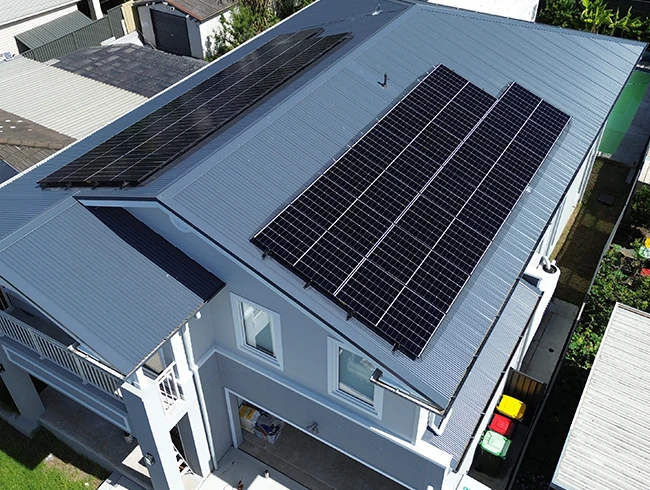
Here’s what each popular size looks like on a Sydney roof. Figures assume 440 W panels, typical for 2026 installs, on a mostly north-facing roof.
| System Size | Panels, Roof Space & Output | Usually Suits |
| 6.6 kW | 15 panels, about 30 m², around 26 kWh a day | 2 to 3 people with gas cooking or heating, using 12 to 18 kWh a day |
| 8 kW | 18 panels, about 36 m², around 32 kWh a day | Families of 3 to 4 with split or ducted air con, using 18 to 25 kWh a day |
| 10 kW | 23 panels, about 45 m², around 40 kWh a day | Larger homes, a pool pump, or planning a solar and battery package or EV |
| 13 kW+ | 30 panels, about 58 m², around 52 kWh a day | All-electric homes with an EV and battery, usually on three-phase power |
Output drops by roughly a third in winter. If you want solar to cover most of your daytime use in June, size for winter rather than the yearly average.
How to Size Your Solar System in Five Steps
Online calculators are a good start, but a proper size comes from your own data. Here’s how we do it on every site assessment.
- Find Your Real Daily Usage: Look for “average daily usage” in kWh on your bill. One bill isn’t enough, because a mild spring quarter can look half the size of a January quarter with the air con running. Ask your retailer for 12 months of smart meter interval data.
- Work Out When You Use It: Panels only cover what you use while the sun is up, unless you store it in a battery. With NSW feed-in tariffs often just a few cents per kWh, exporting is worth very little. A household that’s home during the day gets far more value from each panel than one that’s out from 8 to 6.
- Do the Base Maths: Daily kWh ÷ 4 = minimum system size in kW. Sydney averages about 4 kWh per kW of panels per day across the year. To cover more of your winter use, divide by 2.8 instead, which is closer to a June day.
- Add for the Next Ten Years: Panels last 25 years or more, and adding a second small system later costs more per panel.
- Check It Against Your Roof and Network: Count the usable north, east and west roof. You can install up to 133% of the inverter’s capacity in panels, so a 5 kW inverter takes up to 6.65 kW. Your network (Ausgrid, Endeavour Energy or Essential Energy) then sets your export limit, commonly 5 kW per phase.
Why the Right Size Changes Across Sydney
A 6.6 kW system in Paddington and one in Penrith can be very different jobs. These are the local factors we see most on site visits.
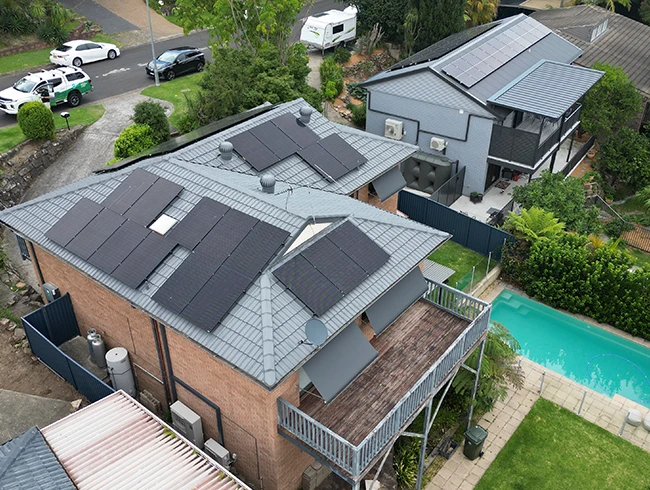
- Inner West, Eastern Suburbs & North Sydney Terraces: Narrow, split roofs and shade from neighbouring walls and street trees often cap these homes at 3 to 6.6 kW. Microinverters or optimisers help when part of the roof is shaded. In a heritage conservation area, check with council first.
- Western Sydney & the Hills District: Summer days above 40°C mean long air con hours, and panels lose a little efficiency as they heat up. We usually size a bit larger here and put some panels on the west face to line up with the 3 to 7 pm cooling peak.
- Northern Beaches, Eastern Suburbs Coast & Sutherland Shire: Salt spray doesn’t change the size you need, but it changes what you install. Choose panels tested for salt mist corrosion and marine-grade mounting and fixings.
- Blue Mountains & Southern Highlands: Winter heating is the big load, just when output is lowest. Size for June, not the yearly average, especially if you’re moving to reverse-cycle heating.
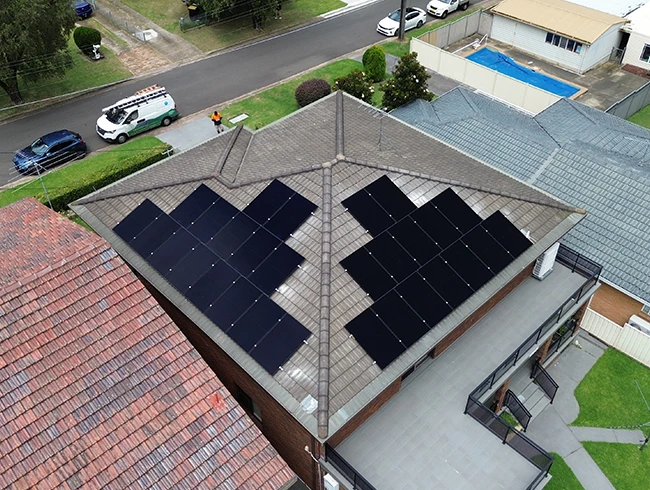
Worked Example: A Hills District Family of Four
Ducted air con, gas hot water, both parents working from home two days a week, and an EV on the shopping list. Their 12 months of meter data averaged 24 kWh a day.
- Base size: 24 kWh ÷ 4 = 6.0 kW
- EV in the next year: + 1.2 kW
- Battery to cover evenings: + 3.0 kW
- Target size: about 10 kW
That’s 23 panels, split across the north and west roof faces to catch the late-afternoon air con load, on an 8 kW hybrid inverter that’s ready for a home battery. Because they’re single-phase with a 5 kW export limit, the battery soaks up what the grid won’t take, and a smart EV charger puts the midday surplus into the car.
Illustrative example based on a typical Hills District home. Your numbers will differ.
Sizing a Battery to Go With It
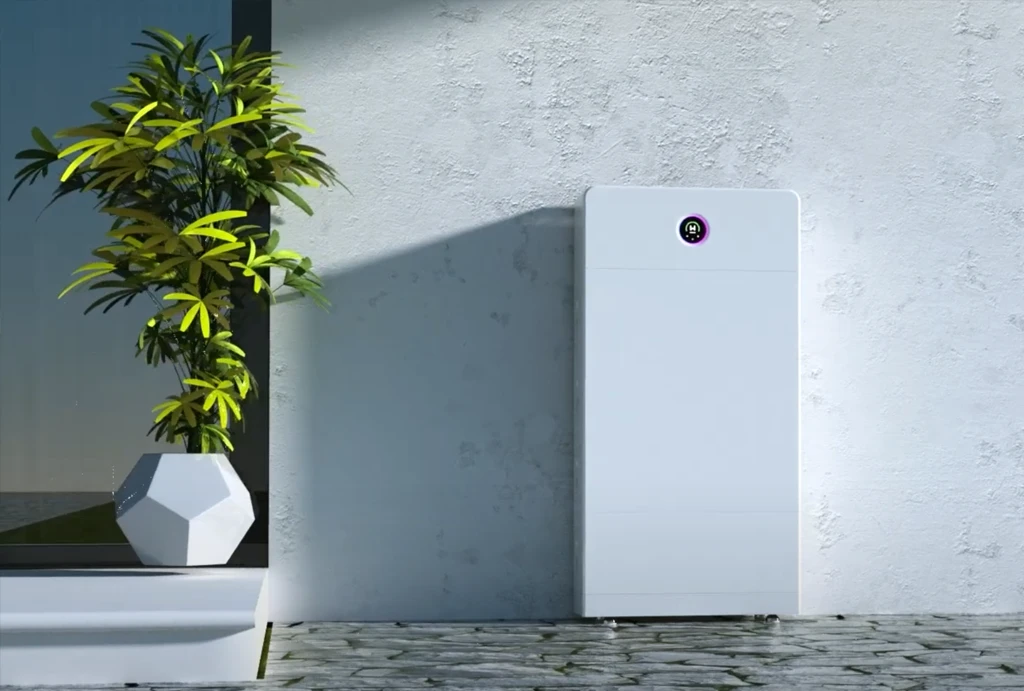
A battery is sized from your evening and overnight use, not your total use. Look at your meter data from about 4 pm to 7 am. Most Sydney households we see use between 8 and 14 kWh in that window, which is why 10 to 13 kWh batteries are the popular choice.
Don’t buy more battery than your panels can fill on a winter day, or it’ll sit half empty for four months of the year. And if a battery is likely in the next few years, get a hybrid inverter now so you don’t have to replace it later.
The federal Cheaper Home Batteries Program takes a discount off eligible batteries at the point of sale, and it can be combined with the NSW Home Energy Saver Program 0% loan. The discount depends on battery size and changes over time, so we confirm the current figure in your quote.
Sizing Mistakes We Fix Every Month
- Sizing from one bill: A spring bill can make a home look half as thirsty as it really is in January.
- Going as small as possible to save a few hundred dollars: Adding panels later means a new approval, possibly a new inverter, and panels that may not match.
- Going huge for the feed-in tariff: With exports paying a few cents, panels you can’t use or store rarely pay their way.
- Ignoring the inverter: Panels over 133% of inverter capacity can’t claim small-scale technology certificates (STCs), and an undersized inverter clips your best hours.
- Sizing over the phone: Nobody can size a system properly without seeing your roof and your meter data. That’s why a site and bill check is step one of our installation process.
Frequently Asked Questions
What size solar system does an average Sydney home need?
Most Sydney homes use between 15 and 25 kWh a day, which works out to a 6.6 kW to 8 kW system. Divide your average daily usage by 4 to get the minimum size in kW, then add capacity if you plan to get a battery, an EV or electric hot water.
How much power does a 6.6 kW solar system produce in Sydney?
About 26 kWh a day averaged across the year. Expect around 18 kWh on a typical June day and up to 35 kWh on a clear December day, depending on roof direction and shading.
How many panels are in a 6.6 kW system?
Fifteen 440 W panels, which need about 30 square metres of roof. With lower-wattage panels you’d need 16 to 18.
Is a 10 kW system too big for a single-phase home?
Not necessarily. Most single-phase connections on the Ausgrid and Endeavour networks limit exports to about 5 kW, but you can still install more panels as long as your home or a battery uses the extra power. A 10 kW system makes the most sense when it’s paired with a battery, an EV or high daytime use.
Does roof direction matter for solar in Sydney?
Yes. North-facing panels produce the most. East and west faces produce roughly 10 to 15 percent less per panel but spread generation into the morning and late afternoon, which often suits households with afternoon air con. South-facing panels produce noticeably less and are usually a last resort.
Can I add more solar panels later?
You can, but it usually costs more per panel than sizing correctly the first time. You may need a new inverter, a new network approval, and panels that match your originals, which can be hard to find after a few years.
Should I get a battery at the same time as solar?
If you use most of your power in the evening, a battery is worth pricing alongside your panels. If you’re not ready yet, choose a hybrid inverter so a battery can be added later without replacing it.
Get Your Free Sydney Sizing Report
Our SAA-accredited designers will size your solar, battery and EV charging together, and show you what each option saves.
Why Choose Instant Solar
We are proud to help families across New South Wales gain more control over their energy.
We focus on providing a long-term result that actually does what it says on the box.
Based in Blacktown
Our own installation team
Long-term support